Reviews of the album Tapestries (2026)
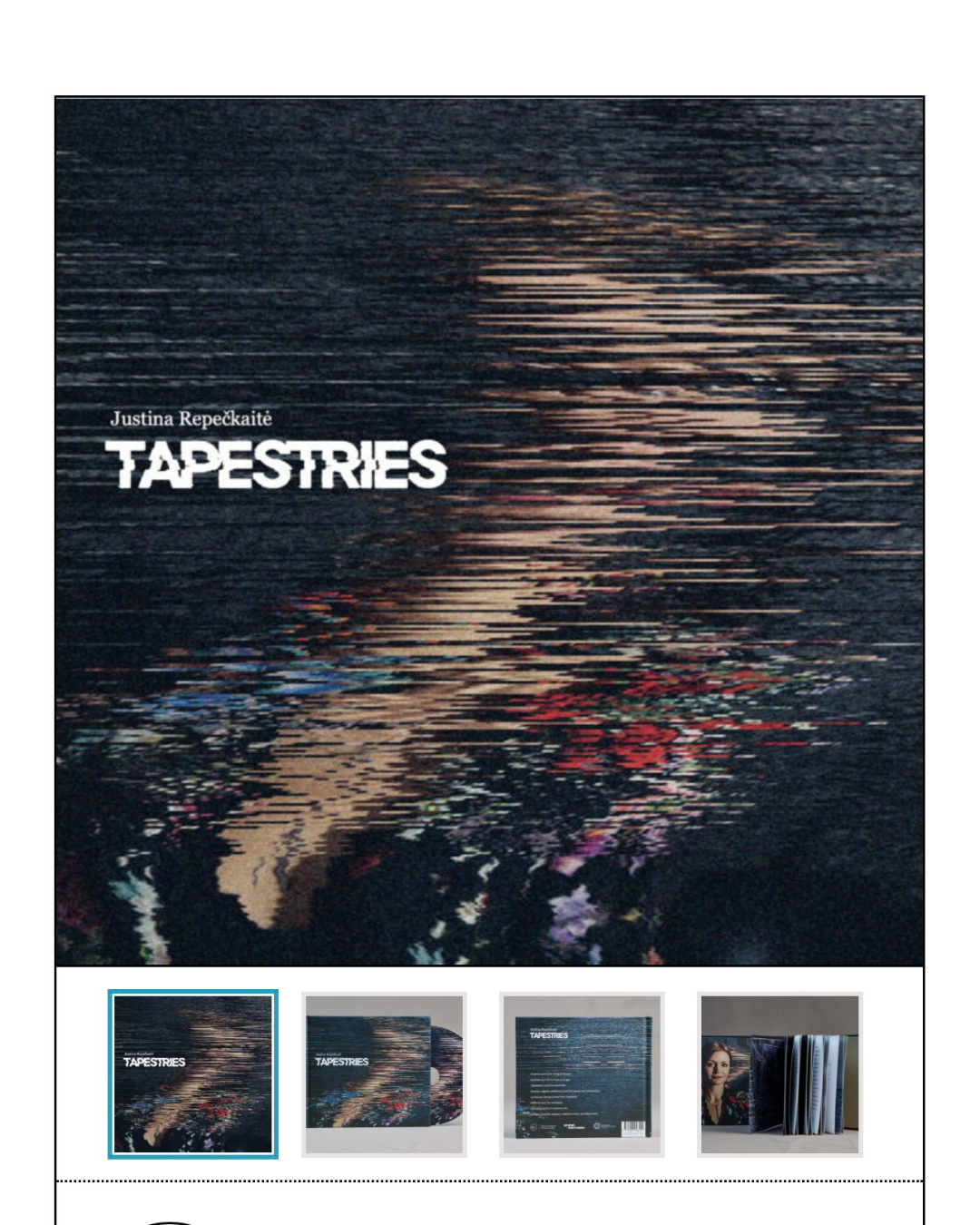
Since its release on 18 May 2026 by the Music Information Centre Lithuania, Tapestries has received reviews and features from publications across Europe and the United States.
5against4 — Simon Cummings · 11 June 2026
Simon Cummings focuses on Repečkaitė’s distinctive treatment of musical tension, noting how she repeatedly “sidesteps and reconfigures” the familiar progression of tension, climax and release. Across the album’s eight works, conceptual ideas become starting points for music that moves far beyond their sources, while recurring contrasts between sustained and granular, acoustic and electronic, mellifluous and abrasive sounds create a heightened sense of intensity. Cummings describes the album as “challenging, rewarding complexity” and praises its ability to combine “strangeness and immediacy” — ultimately calling it “shockingly beautiful”.
Bandcamp Daily — Peter Margasak · 8 June 2026
Selected for The Best Contemporary Classical Music on Bandcamp, May 2026, Tapestries is described as a “remarkable survey” of Repečkaitė’s first decade of work. Margasak highlights the striking variety of the album’s eight compositions, from the orchestral intensity of Chartres and the raw vocal and instrumental textures of Incantare to the dark, tightly wound Tapisserie and the electronically transformed birdsong of Sturnus vulgaris cohibitus. He concludes simply: “Tapestries is stunning.”

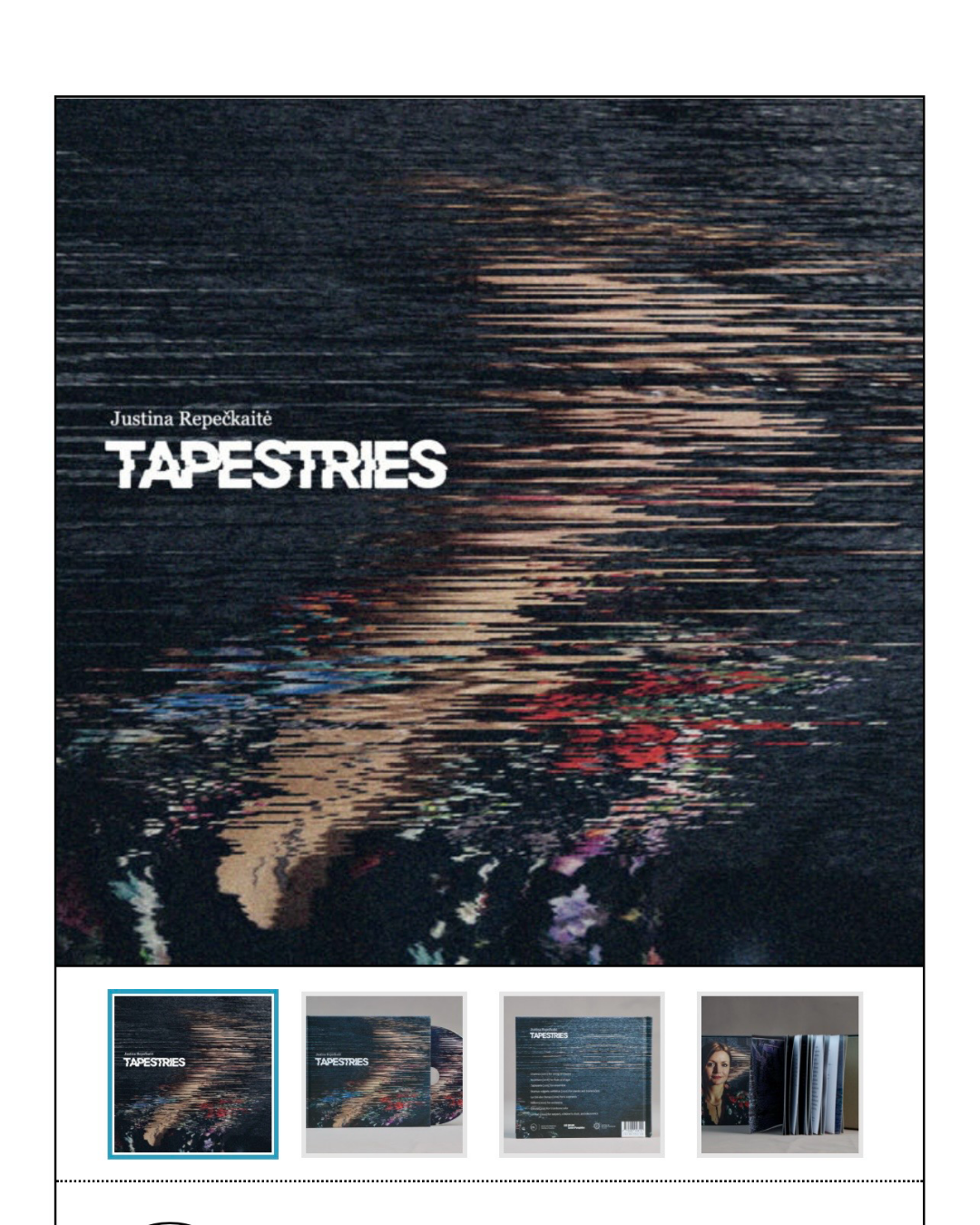
A Closer Listen — Gianmarco Del Re · 20 August 2026
Writing about works composed over more than a decade, Gianmarco Del Re emphasizes the remarkable coherence of Tapestries, despite the distinct character of each composition. He draws attention to Repečkaitė’s sensitivity to the smallest changes in resonance and colour, and to the way medieval stained glass, manuscripts, birdsong, healing charms, poisonous plants and historical medical texts become structural sources rather than programmatic illustrations. The review concludes that Repečkaitė is interested not in translating images into music, but in translating “systems of thought” — architecture becoming form, birdsong becoming resonance, and botanical knowledge becoming gesture.
Chain D.L.K. — Vito Camarretta · 5 August 2026
Vito Camarretta presents Tapestries as an exhibition of a highly tactile musical language, shaped by architecture, medieval symbolism, acoustics and materiality. He explores individual works in detail, from the stained-glass-inspired orchestral textures of Chartres and the interwoven instrumental attacks of Tapisserie to the electronically animated birdsong of Sturnus vulgaris cohibitus and the hybrid sound world of La muë. The review highlights Repečkaitė’s ability to unite rigorous construction with sensory immediacy, describing the album as a portrait whose “real fascination emerges only when leaning closer”.
SilenceAndSound — Roland Torres · 4 June 2026
Roland Torres describes a musical universe “sharp as glass and light as air”, characterized by textures, movement, mathematical structures and sonic architecture. He emphasizes the striking coherence of the album and its balance between pointillistic detail, repetition and constantly shifting layers. The review concludes with a single word: “Passionnant.”
Percorsi Musicali — Ettore Garzia · 27 June 2026
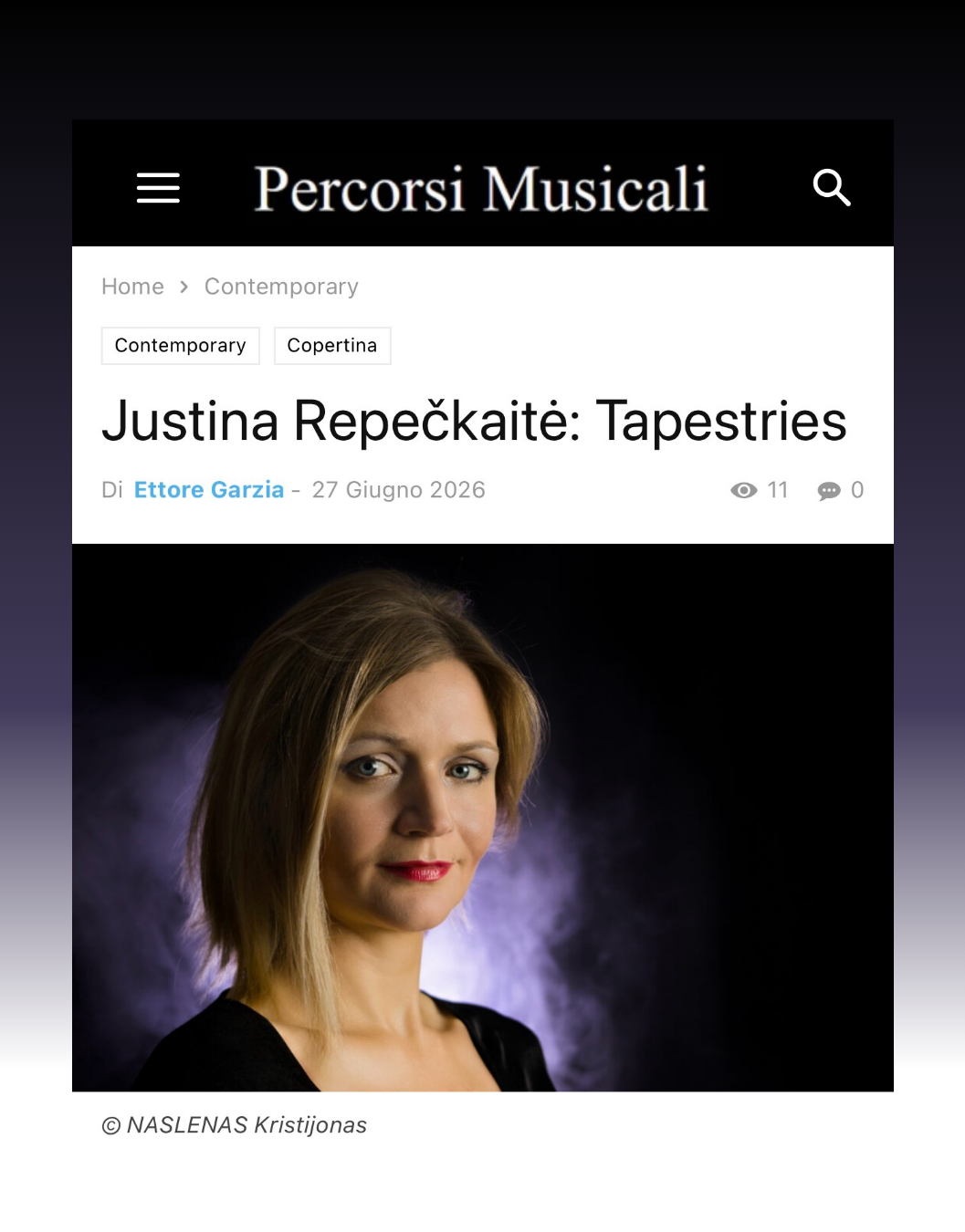
Ettore Garzia presents Tapestries as Repečkaitė’s first official monograph, bringing together eight works written between 2012 and 2024. He highlights the sophistication of her musical language and its distinctive fusion of geometric and mathematical concepts with medieval culture, describing the album as an opportunity to appreciate the talent and beauty of some of her most significant compositions.
Kulturkompass — Til Rohgalf · 15 August 2026
In “Timbres between Electroacoustics and Mannerism”, Til Rohgalf situates Tapestries within Repečkaitė’s longstanding engagement with late-medieval music, particularly the rhythmic and notational complexity of the Ars subtilior. He examines the role of musical proportions, architectural structures and electroacoustic transformation across the album, with particular attention to the physical fusion of electronic sounds and acoustic instruments. He describes Repečkaitė’s resulting sound world as highly individual and “almost hermetic”.
Radiohoerer (DE)
Feature on Tapestries.
African Paper (DE)
Feature on Tapestries.
Music Map Review (IT)
Review of Tapestries.