Official release of Justina Repečkaitė’s first album Tapestries: 18 May, 2026 by the Music Information Centre Lithuania. Order on Bandcamp or on MusicLithuania store.
The album brings together works composed between 2012 and 2024, reflecting key stages in the composer’s artistic development. It features recordings made in the Baltic States, France, and Germany, and will be released in both physical and digital formats.
Read articles about Tapestries (2026) on The Best Contemporary Classical Music on Bandcamp (USA), 5against4 (UK), Music Information Centre Lithuania (LT-EN), Radiohoerer (DE), African Paper (DE), Music Map Review (IT), SilenceAndSound (FR), Percorsi Musicali (IT).
“The album’s title, Tapestries, is ideal; the fabric of these pieces is substantial, sumptuous, weighty, laden with abstruse designs and patterns, and above all, shockingly beautiful.”
The booklet visuals, exploring the composer’s sources of inspiration, were created by the renowned Lithuanian artist and designer Liudas Parulskis, known for his photo-manipulations. The accompanying text was written by the composer.

Justina Repečkaitė’s photo taken by Kristijonas Našlėnas at IRCAM’s studio in 2024.
Performers featured on the album include:
Estonian National Symphony Orchestra (cond. Clément Power),
Ensemble for New Music Tallinn (cond. Arash Yazdani),
Sinfonietta Rīga (cond. Normunds Šnē),
Les Pages of the Centre de musique baroque de Versailles (cond. Clément Buonomo),
with the IRCAM team,
and soloists Patrick Wibart (serpent), Kanae Mizobuchi (soprano), Mathilde Comoy (trombone), Vytenis Gurstis (flute) and Marta Finkelštein (piano).
Mastering: Arūnas Zujus (mamastudios).
La muë (2024) features in Repečkaitė’s album Tapestries (2026) that will be released by the Music Information Centre Lithuania this Spring. La muë was broadcasted on France Musique on Wednesday, February 11, 2026, at 21:35 in the program Le Concert du soir (host Arnaud Merlin), within the section Nouveautés du disque. Listen to the podcast here. La muë starts at 01:36:20.
Justina Repečkaitė. TAPESTRIES
1. Chartres Sinfonietta Rīga
2. Incantare Vytenis Gurstis
3. Tapisserie Ensemble for New Music Tallinn
4. Sturnus vulgaris cohibitus Marta Finkelštein
5. La Cité des Dames Kanae Mizobuchi
6. Vellum Estonian National Symphony Orchestra
7. Datura Mathilde Comoy
8. La muë Patrick Wibart, The Pages from the Centre de musique baroque de Versailles
Sound engineers: Arūnas Zujus, Natalia Ervits, Karl Erik Laas, Christophe Hauser, Jérémie Bourgogne, Luca Bagnoli (recording at IRCAM)
Mastering: Arūnas Zujus
Graphic design: Liudas Parulskis
English language editor: Brendan Harding
Producer: Radvilė Buivydienė
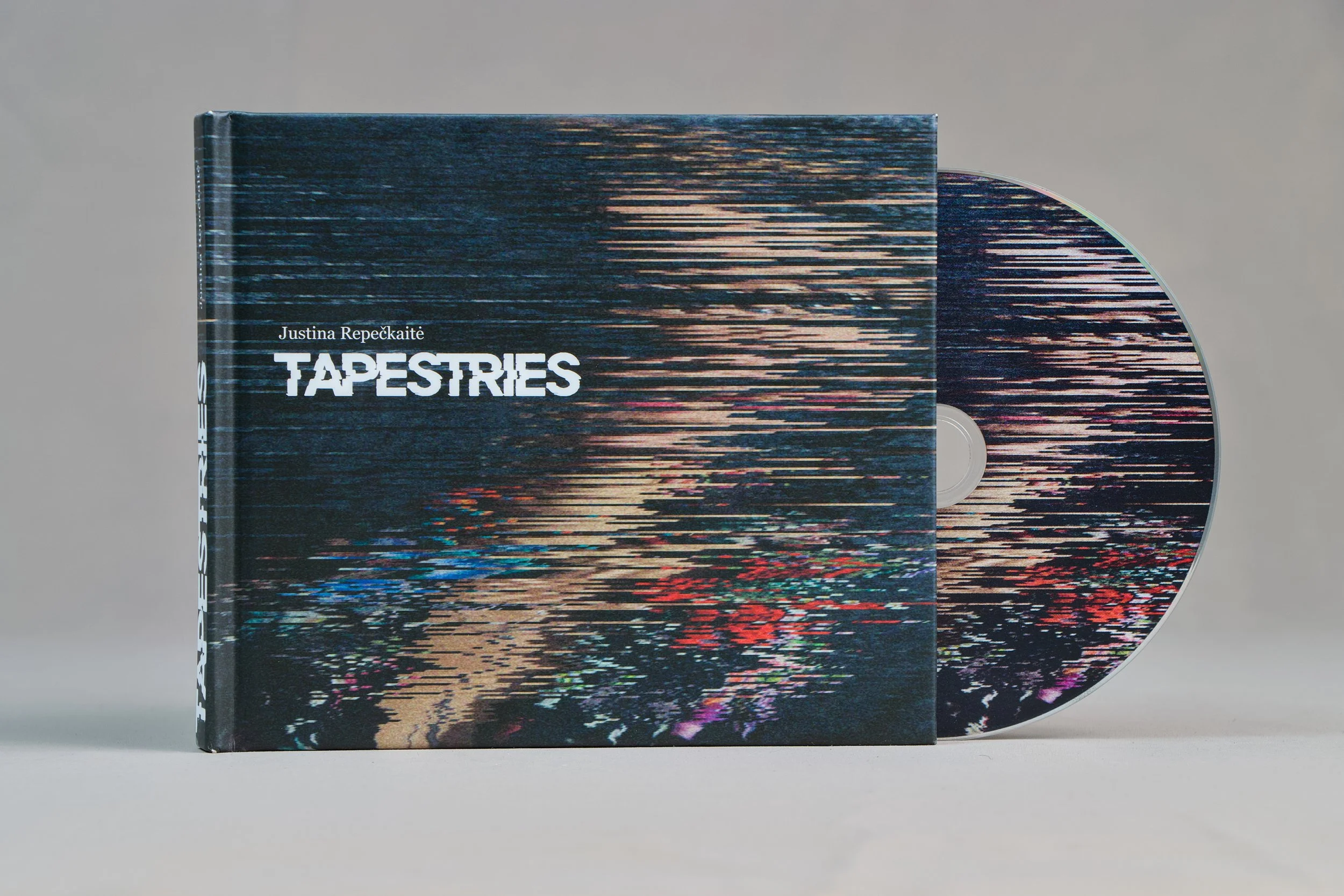
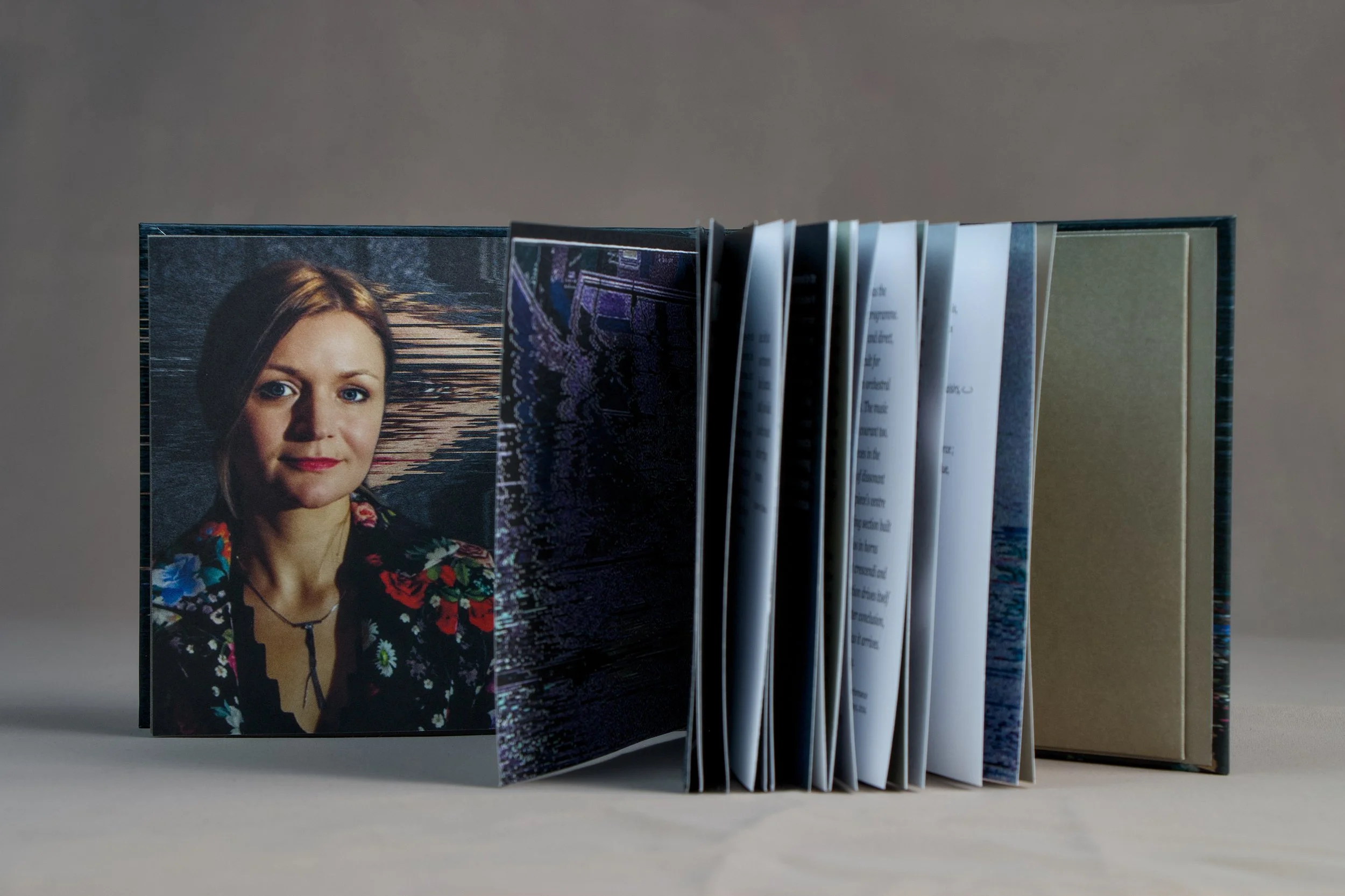
“First of all, we are truly delighted that the composer chose to release her debut album in Lithuania. Over several years, we developed the album’s programme together, worked intensively with performers in Lithuania, Germany, France, and Estonia, and devoted particular attention to its visual identity — especially the CD booklet. As a record label, we are extremely proud that our catalogue has been enriched by substantial co-productions with IRCAM and some of the region’s leading contemporary music performers. ”
“Justina Repečkaitė ist eine der bedeutendsten zeitgenössischen litauischen Komponistinnen, deren Name sich in der internationalen Musikszene zunehmend etabliert. Die 1989 geborene Künstlerin studierte in Litauen und Frankreich und vertiefte ihre Kenntnisse später am renommierten IRCAM-Institut in Paris, wo sie derzeit lebt und arbeitet. Ihre Musik zeichnet sich durch konzeptionelle Tiefe, präzise konstruierte Strukturen und eine einzigartige, intellektuell geprägte künstlerische Sprache aus. Repečkaitės Werk wird oft mit architektonischen und visuellen Prinzipien in Verbindung gebracht – musikalische Ideen entfalten sich wie Ornamente oder räumliche Strukturen, inspiriert von gotischen Kathedralen, Buntglasfenstern und Textilkunst. Ihre Kompositionen zeichnen sich durch einen ausgeprägten Sinn für Klangfarben, vielschichtige Klangtexturen und einfallsreiche Kombinationen von Instrumenten und Elektronik aus. Sie schafft einen meisterhaften Ausgleich zwischen strenger Konstruktion und einem sensiblen, fast hypnotischen Klangfluss und schafft so Musik, die sowohl intellektuell als auch emotional nachhallt.”
“Repečkaitės Kompositionen entfalten sich, wie es im Begleittext heißt, häufig entlang architektonischer und textiler Strukturen, wobei sich dichte Klangschichten zu strukturellen Gefügen verdichten, die ebenso analytisch durchdrungen wie sinnlich erfahrbar sind. Das Album, so heißt es ferner, folgt dieser Ästhetik, indem es solistische Arbeiten, elektroakustische Konstellationen und Ensemble- sowie Orchesterstücke miteinander verschränkt und so eine vielschichtige Dramaturgie entstehen lässt.”
“Her works are woven with cold and white polyphonies. Like Tapisserie (2015), which presents itself as a complex web of lines stretched to the extreme, as if stretched towards an impossible resolution, but whose relationships and discrepancies – a heritage of medieval music? – are governed by internal mathematics. And with only one transverse flute (Incantare, 2018), she builds a world crowded with terrifying monsters. Do not be fooled by appearances: in this smart thirty-something, with a wise and discreet demeanour, anguish lurks at every corner of the note.”
The release of the album by Music Information Centre Lithuania is sponsored by: